No fingerprints
Lorne Michaels on producing a live show, and what it says about managing one.
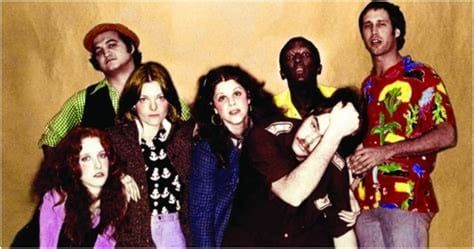
Full disclosure: I have been a fan of Saturday Night Live since its very beginning. Yes, I rewatch The Blues Brothers on my birthday every year. So I watched Lorne, Morgan Neville's 2026 documentary on Lorne Michaels, now streaming on Netflix. Michaels has produced the show from its first season until 1980, and again from 1985 to today, along with films such as Wayne's World, Tommy Boy, and Mean Girls.
Here is what he says about his craft:
The thing about producing is that it's an invisible art. If you're any good at it, you leave no fingerprints.
The writers write, the director directs, everyone contributes what they contribute, and the producer has to "never, ever take your eye off the show." Then he adds:
It just takes longer to prove you were good at it.
Here is what it made me think about.
The prevalent script casts the manager as director: the one who shapes the performance, this line, this timing, this way. Michaels has worked from a different script since 1975. The producer decides who the players will be, puts the pieces in place, and gives them as much room as possible to bring everything they know and everything they're capable of to the game.
And the game is live. SNL goes on air at 11:30pm whether anyone is ready or not, with no fixing it in post.
A manager's day is like that. Every meeting with a customer, every handoff to another department, happens once, in real time.
So what does the customer meet in that moment? Under one script, a messenger carrying out an edict from above, who can't adapt it, can't explain it, and falls back on "that's the policy." Under the other, a person who is there in their own right, bringing their judgment and knowledge to the encounter, the way a cast member meets the audience. The audience never sees the producer, only the performance.
I recognize the invisibility from facilitation, where I have long described my place as the dot in the corner: present but not central, essential but not dominating. When a workshop ends, I never see how much people have learned or how much of it they carry into their everyday work. Whatever proof there is shows up later, somewhere else, mostly without me. Michaels at least gets to watch the show.
What I'm still wondering is how a manager lives with that delay when the corporate script they've been handed rewards bragging gloating being seen. Michaels has had since 1975 to prove he was good at it.
PS. It's not without irony that the man who says the best producing leaves no fingerprints is now the subject of a feature documentary, made for the very audience who was never supposed to see him.
==
Whenever you're ready
Facilitation. Workshops and sessions where your team works on its own real challenges, not case studies, and finds its own way forward.
Thought Partnership. One-on-one conversations, every other week, thinking alongside you about what you're facing. It's collaborative inquiry, not advice.
Three-Day Leadership Development Program. Managing yourself, managing laterally, managing teams. Participants develop judgment through sustained attention to their actual work.
Reply to this email for a quick chat.