September 2025 - Five assumptions that seem natural until you look closely
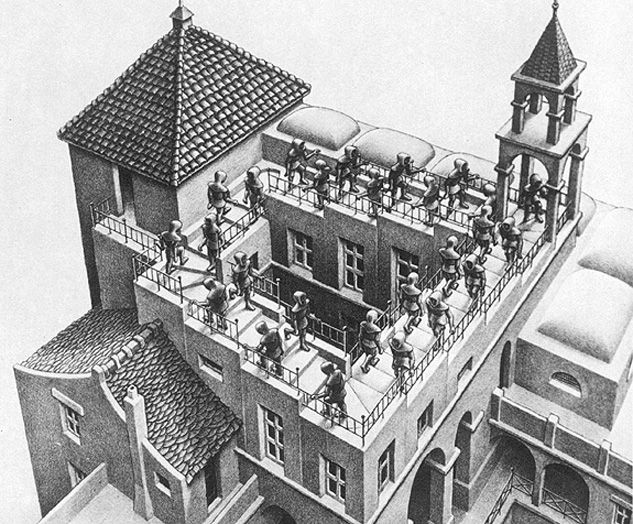
We build organizations on assumptions that seem natural, even inevitable. These pieces show what happens when you look closely at five of them: that abundance means cheaper goods rather than better work, that hierarchy makes teams effective, that our workload reflects what’s necessary, that good conversations require agreement, and that packed calendars signal value.
Abundance for workers
What gives meaning to our lives is not just the fruits of our labor, but also the work itself. When people are asked about well-being and life satisfaction, the work they do ranks at the top, along with contributions to their community and family bonds.
Progressive “abundance” economics focuses on delivering cheaper, more plentiful goods—but ignores people as workers. Jobs provide more than income: pride, dignity, social recognition. Productivity gains through safety regulations reduce workplace injuries but lower construction productivity statistics. Economists see this as a problem. Workers might see it differently.
We’ve spent decades optimizing for cheaper stuff. Safety regulations reduce deaths and injuries. They also hurt productivity numbers. So we debate whether preventing workers from dying is worth the efficiency cost. That’s not abundance. That’s just more consumer goods built on destroyed communities.
The critique: Shop Class as Soulcraft by Matthew Crawford. An exploration of how manual work provides meaning, dignity, and agency that knowledge work often fails to deliver.
Why hierarchy is inherently problematic
Many companies get this backward, requiring manager approval to order office supplies while executives make billion-dollar bets on their own.
W.L. Gore & Associates has operated for 67 years as a $4.8B company with 12,000 employees—without traditional hierarchy, job titles, or bosses. Their “waterline principle” inverts conventional risk management: experiment freely above the waterline, but anything that could sink the ship requires peer consultation. The “no jerks” rule gets enforced to the point of dismissal.
Gore isn’t a feel-good story. It’s existence proof that most hierarchy exists to manage status and control, not coordinate work. We protect against small mistakes through approval chains while concentrating catastrophic risk in executive decisions. The gap between what we say matters and what we’ll sacrifice to preserve it—that’s where organizational integrity lives or dies.
The alternative: Reinventing Organizations by Frederic Laloux. A detailed look at companies operating without traditional management hierarchies, examining how they make decisions, allocate resources, and coordinate work.
The workload fairy tale
Much of our weekly work might be, from a strict value production perspective, optional.
Studies across Iceland, the UK, and Germany found that reducing workweeks to four days doesn’t substantially decrease productivity. Cal Newport calls it “the workload fairy tale”: the belief that our current commitments represent exactly what we need to be doing. We associate activity with usefulness, saying yes until every minute is filled. The key work requires less than forty hours.
Everyone’s busy. No one can explain why. Cut the week to four days and the essential work fits. This isn’t about working less—it’s about seeing how much of what fills our time exists because we had time to fill. The workload fairy tale is organizational collusion disguised as necessity.
The law: Parkinson’s Law by C. Northcote Parkinson. The observation that work expands to fill the time available for its completion, and the bureaucratic implications of this phenomenon.
Good conversations don’t require everybody to agree
When people came into the conversation looking to compromise, this led to more expansive exploration. On the other hand, the people who came in trying to persuade their partner explored less in their conversations and were ultimately less successful in achieving a shared vision for a path forward.
Brain imaging reveals that productive conversations involve neural divergence, not constant synchrony. Friends’ brain patterns pull apart as they explore more topics and wider ground. People entering conversations to compromise explore more expansively than those trying to persuade. Synchrony works as a launching point, not a destination.
We’ve built entire practices around getting everyone aligned. But the conversations that generate new thinking require divergence. Most organizational conversation is designed to collapse difference as quickly as possible—get to consensus, resolve tension, move on. What if the divergence is the point?
The dialogue: Dialogue: The Art of Thinking Together by William Isaacs. How collective thinking emerges not from agreement but from the capacity to hold multiple perspectives in tension.
Executives should be the least busy people
Wide open calendars should not be seen as lazy, but as intentional availability.
Executives who pack calendars back-to-back have traded availability for the appearance of efficiency. Historical executive behavior—long lunches, early golf, reading at work—reflected understanding that value comes from being ready for critical moments, not constant grinding. Modern insecurity about appearing busy drives executives to prove they work harder than everyone else.
The executive calendar is a confession document. We’ve confused motion with progress, activity with impact, presence with contribution. Empty time feels dangerous. Maybe the packed calendar medicates a deeper fear: if we stopped thrashing long enough to think clearly, we’d confront what actually matters and how little of what we’re doing serves it.
The practice: Essentialism by Greg McKeown. The case for doing less but better, distinguishing between the vital few activities and the trivial many.
==
In Case You Missed It These are the weekly essays I published this month:
- Base-10 Thinking - What feels inevitable is often just familiar. Once you realize our number system is arbitrary, you start questioning all the frameworks we mistake for truth in management and work.
- Learning from Leaders in the Spotlight - Most leadership wisdom comes from a self-selecting few who choose visibility. What might we learn from the invisible leaders who never write books because they’re too busy leading?
- The Counterpuncher Syndrome: Why Your Team Struggles to Innovate - Organizations train people to critique rather than create, turning meetings into boxing rings where ideas are opponents to defeat instead of possibilities to develop.
- Are These Your Ideas? - The difference between intellectual arbitrage and genuine thought. When you’re trafficking in borrowed insights versus offering what you’ve actually worked through, everyone in the room can feel it.
==
Whenever you’re ready
Here are ways we can work together:
Facilitation — I create conditions for teams to think more deeply about their challenges and discover their own ways forward. Whether you’re working through strategy, alignment, or complex decisions, I work with the purpose you bring and the energy in the room to help you do your best thinking together.
Thought Partnership — Ongoing one-on-one conversations (typically every other week) that help you develop effectiveness and find greater fulfillment in your leadership role. Not problem-solving or advice-giving, but collaborative inquiry into the challenges you’re navigating.
Three-Day Leadership Development Program — Experiential learning for managers focused on three domains: managing yourself, managing laterally, and managing teams. Participants work on their actual challenges through structured activities and reflection, developing judgment and authentic voice rather than acquiring techniques.
If you’d like to discuss how any of these might fit your current situation, reply to this email. I’m always happy to chat.