The Free Man
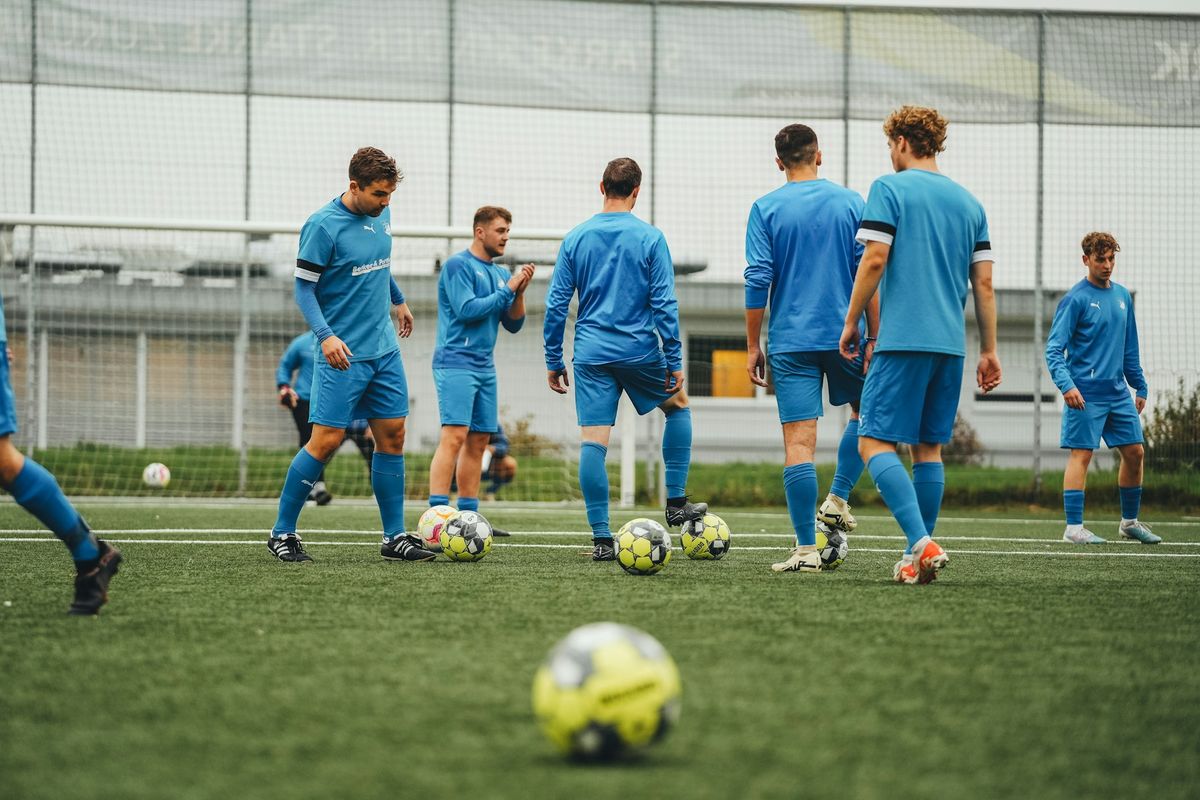
It’s the World Cup and I couldn’t help myself.
Football, the one where you actually hit the ball with your foot, is the only truly global game. Go anywhere in the world. Anywhere. And people are either playing it or talking about it. Dale Carnegie wrote a book about how to win friends and influence people. He could have saved himself the trouble. One question does the same work in any country, any language, any room: what’s your football team?
What follows is not primarily about football. But it starts there, because that’s where the idea lives.
Barcelona in 1991 was preparing for a year that would not come again. The Olympics were twelve months away. Seville had its World Expo, Madrid had been named cultural capital of Europe, and Barcelona was doing what cities do before the world arrives: remaking itself. The waterfront, long closed off, was being opened. Construction was everywhere, at the port, in the old industrial zones, along the face the city presented to the sea.
I was at IESE, in the upper part of the city, though most of the doctoral work happened elsewhere, in Pamplona, at the University of Navarra. I was writing about interpersonal trust: what it makes possible between persons, and what its absence forecloses. The deeper question kept expanding. What does it mean to treat a person as a person inside an organization, rather than as a function that happens to be occupied by a human being?
At Camp Nou, Johan Cruyff was asking something structurally similar in a language I could not yet read. He had played for Barcelona in the 1970s, bringing from Ajax a philosophy of football that had briefly astonished the world at the 1974 World Cup. Now he was back as coach. He had recently promoted a young midfielder named Pep Guardiola to the first team and placed him in the pivot, the deep-lying midfielder whose function is neither to score nor primarily to prevent scoring, but to manufacture the conditions under which everything the team does becomes possible.
I don’t remember thinking about football that year.
That is what this essay is about.
The idea had its origin in Amsterdam, a decade earlier.
Rinus Michels took charge of Ajax in 1965 and began building something that had no name yet. His teams pressed high, rotated positions continuously, and demanded of every player what most systems demanded only of a few: that they understand the entire game, not just the portion assigned to them. A defender who lost the ball became an attacker trying to win it back. A striker who dropped deep became a midfielder creating space for someone else. The positions were real, but they were porous, permeable to intelligence and need. What held the shape was not fixed roles but shared understanding.
They called it Total Football. The name came later, but it pointed at something precise: the idea that football is not a collection of specialized functions to be executed in sequence, but a continuous collective reading of space, pressure, and opportunity. The whole team attacks. The whole team defends. What distinguishes the player is not which role they occupy but how fully they perceive the situation they are in.
Cruyff was the idea made visible. Not the fastest player on the pitch, not the most physically imposing, but the most perceptive. He seemed to process the game at a different speed than everyone around him, not because he moved faster but because he saw earlier. When Michels left Ajax for Barcelona in 1971, he took the philosophy with him. The idea arrived at Camp Nou two years before Cruyff did.
Cruyff followed in 1973, rejoining his coach on new ground. In his first season he led Barcelona to their first league title in fourteen years, including a 5-0 win over Real Madrid at the Bernabéu. But it was the following summer that announced what Michels and Cruyff had actually been building.
The Netherlands at the 1974 World Cup, the side journalists named Clockwork Orange, played Total Football in its purest international expression. They reached the final taking opponents apart through continuous positional interchange and relentless pressure. Cruyff won the tournament’s Golden Ball. The Netherlands lost the final to West Germany 2-1, but the argument they made about what the game could be outlasted the result.
What observers saw was fluidity, players appearing in unexpected positions, the shape of the team continuously reforming. What they were actually watching was a claim: that a football team is not a set of roles to be executed but a shared act of perception. That the player’s position is not their identity. That what matters, finally, is what they are able to see.
Cruyff returned to Barcelona as coach in 1988, to a club in crisis. He arrived with the same conviction he had always carried, that a football club’s identity is not its results but its idea of the game.
In his first week, he appeared unannounced at a youth team match at the Mini Estadi, just down the road from Camp Nou. At half time he made his way to Charly Rexach, the youth coach, and asked about the young Spaniard playing on the right side of midfield. He told Rexach to move him to the pivot, the deep-lying central position that barely existed in Spanish football at the time. Rexach complied. The teenager, seventeen years old, moved into the new role as though he had always played there.
Cruyff kept watching. He promoted Pep Guardiola to the senior squad within two years. When Pep played, Cruyff said: it’s as if he’s always played with us.
What Cruyff had recognized was not a physical gift. Pep was never the quickest or most powerful player on the pitch. It was a perceptual one. The pivot requires the player to see the entire game at once: where pressure is forming, where space is opening, where the next move should go before it becomes obvious. Pep read it all from the base of midfield, drawing defenders toward him to open lanes for others, holding the team’s shape while disturbing the opponent’s. His function was to manufacture the conditions under which everything else became possible.
This was the autumn and winter of 1990 into 1991. I was asking what I thought were entirely different questions, in the same years, a few hundred kilometres north and sometimes in the same city.
It is worth pausing at what Cruyff actually meant by possession.
He operated from a principle that sounds almost trivially simple: the longer I have the ball, the less the opponent has it, and the less they have it, the fewer their chances to score. Keep the ball. But he also said, less often quoted, that if you have the ball you must make the field as big as possible. These two statements belong together. The first is about denial, possession as a way of preventing the opponent from doing harm. The second is about creation, possession as a way of manufacturing the conditions for opportunity. Held apart, each seems incomplete. Together they reveal that possession was never Cruyff’s actual subject. It was his instrument.
The training drill that makes this visible is the rondo. In its basic form, a group of players keeps the ball from one or two defenders in the middle. It looks like a passing exercise. It is not a passing exercise. Every player without the ball must move to create a passing option for the player with it. Every touch invites pressure, which must be resolved by movement that opens a new lane. The ball moves, defenders commit, gaps appear. Movement creates imbalance. Imbalance creates options.
What Pep developed as a coach has a precise name: Juego de Posición, Positional Play. It descends from Total Football but is not identical to it. Its animating principle, in Pep’s own words: the objective is to move the opponent, not the ball.
And the reason you move the opponent is to answer one question, the only question that matters in buildup play. Who is free?
The answer is never fixed in advance. It is generated anew by every opponent movement. If the winger presses the center back, the fullback is free. If the striker presses, the other center back is free. If the attacking midfielder steps, the defensive midfielder must receive. Position plus opponent movement equals decision. The ball moves not to a predetermined destination but to whoever the opposition has just, through their own action, freed. But first you have to see who that is.
Here I must pause on a distinction I have been quietly carrying.
The free man is not the open man.
The open man is a negative condition, absence of immediate pressure, visible, and relatively static. The free man is something more: space, yes, but also time, position, and the capacity to advance the play. You can be open without being free, caught at the wrong angle, in the wrong moment, in the position that leads nowhere. The free man is not just available. He is capable of genuine action.
And here is the thing you cannot legislate. You cannot instruct a player to find the free man in advance, because the free man does not exist in advance. He is produced, moment by moment, by the opposition’s attempts to contain. The player who finds him is not following a rule. He is seeing something, the whole field, the last defensive movement, the space that movement has opened, and acting on what he sees.
The deepest unit of analysis is not possession. It is not space. It is not even the decision. It is perception.
Cruyff’s innovation was not positional fluidity. Other systems had players who rotated and interchanged. It was the cultivation of players who could perceive the game as a whole, who could read, in real time, how the last opponent movement had produced the next freedom. The rondo does not train passing. It trains seeing. The pivot role does not train holding. It trains reading.
Formation, in Cruyff’s sense, is not teaching people what to think. It is teaching them what to see.
And perception is the precondition for freedom. Not openness, but freedom. You can only choose from what you can see.
Years later, coaching his own teams, Pep Guardiola said something that has stayed with me since I heard it. The system does not deny the player’s freedom. It creates its conditions.
At first this sounds paradoxical. Systems constrain. A system that tells players when X happens, do Y is not developing players. It is operating through them. Their judgment is replaced by the designer’s, specified in advance. The system runs; the player executes.
What Cruyff built, and what Pep refined, works differently. The rondo is not a rule. Juego de Posición is not a script. They are instruments for developing a particular kind of intelligence: the ability to read the game at the level of structural forces rather than immediate events, to perceive what is about to become available before it has fully appeared.
A behavioral system replaces judgment. A perceptual system sharpens it.
The free man does not exist in advance. Neither does the decisive situation in any meaningful human encounter. You cannot write procedures for every moment that requires genuine judgment, because those moments arrive novel, in configurations no rule set anticipated. What the system can do, all it can do if it is honest about what it is, is determine what the person is capable of seeing when that moment arrives.
A behavioral system clears space. A perceptual system develops the capacity to act within it. The first removes obstacles. The second builds something harder to build: the ability to see what the cleared space makes possible, and to act on that seeing with genuine judgment.
Only the person can do this. The coach is not on the field. The manager is not in the room when the conversation turns. In the configuration of the decisive moment, unrepeatable and unforeseen, no system decides for you. The system determines what you are capable of seeing. The decision remains yours.
Another question I was working out in those years was this. What does an organization actually do to the person inside it?
There is a version of organizational life that answers by asking only about function. What role does this person occupy? What outputs does the role require? How well is the function being performed? These are not cynical questions. They are often efficient, and sometimes appropriate. But they carry a cost that rarely appears on the ledger. A system built entirely around function treats the person as the means by which a role gets executed. What the person is becoming, what they are growing capable of seeing and deciding, is not the system’s concern.
There is another version. It asks different questions. Not what is this person’s function, but what is this person becoming capable of perceiving and deciding. Not how well is the role being performed, but what kind of intelligence is this system forming. The difference is not merely managerial. To ask only about function is to treat a person as an object, something that occupies a position. To ask about formation is to treat them as a subject, someone who develops, reads, chooses, and acts in ways the system cannot fully anticipate or specify.
Formation is the enlargement of perception.
The purpose of formation is not to produce correct behavior. It is to enlarge what a person is capable of seeing. Once a person sees more, they become capable of decisions that no system could have prescribed in advance.
Organizations speak often of empowerment, of giving people room, removing constraints, creating openness. But openness without formation is space with nothing to do in it. The person has been freed from something. The question worth asking is what it takes to be free for something. That requires enlarged perception, not reduced constraint. The free person and the open person are one sentence apart, and that sentence is the difference between a system that honors persons and one that merely accommodates them.
Trust belongs here too, not as a facilitator of cooperation but as a condition of perception. Trust between persons enlarges the option field. When it exists, more becomes visible, possibilities that distrust forecloses, not through prohibition but through narrowing. What you cannot trust you cannot seriously consider. A relationship without trust is not merely tense. It is impoverished at the level of what can be seen: certain options are present in the situation but invisible to the person facing it. Trust is not what makes cooperation easier. It is what makes certain things visible at all.
This was my work in those years, in a different vocabulary, carried on in the same years as Cruyff’s.
I did not go to Camp Nou in 1991. When I was in the city I was in Pedralbes, within walking distance of the ground, and I watched those matches on television. What I did not do was see what was happening. The framework to read it was not yet there.
Frameworks are not ornaments. They are instruments of perception, what determines what you are able to see in front of you. Without the framework that eventually arrived, Barcelona 1991 was a city preparing for the Olympics and a place where I sometimes happened to be while writing a doctorate. With it, the year becomes something else: a moment when two conversations about the same deep question were being conducted in the same years, sometimes in the same city, in different languages, neither aware of the other.
Pep Guardiola eventually became one of the most analyzed coaches in the history of the game. Thousands of hours have been spent describing what his teams do and what makes the system work. Much of it is accurate. Little of it reaches the claim he was actually making, the one Cruyff had made before him, in Amsterdam and then in Barcelona, which is not about football.
It is about what kind of system increases human freedom.
His answer, lived out across decades before it was ever fully articulated: not the system that tells people what to do, but the system that enlarges what they are capable of seeing. Freedom is not the absence of structure. It is not openness. It is the presence of perception, enough perception to recognize the options a situation makes available, and enough trust in one’s own judgment to act on them.
The options were always there.
You needed the perception to see them.
==